
🎧 Prefer audio? You will love listening to this AI‑made version of the article:
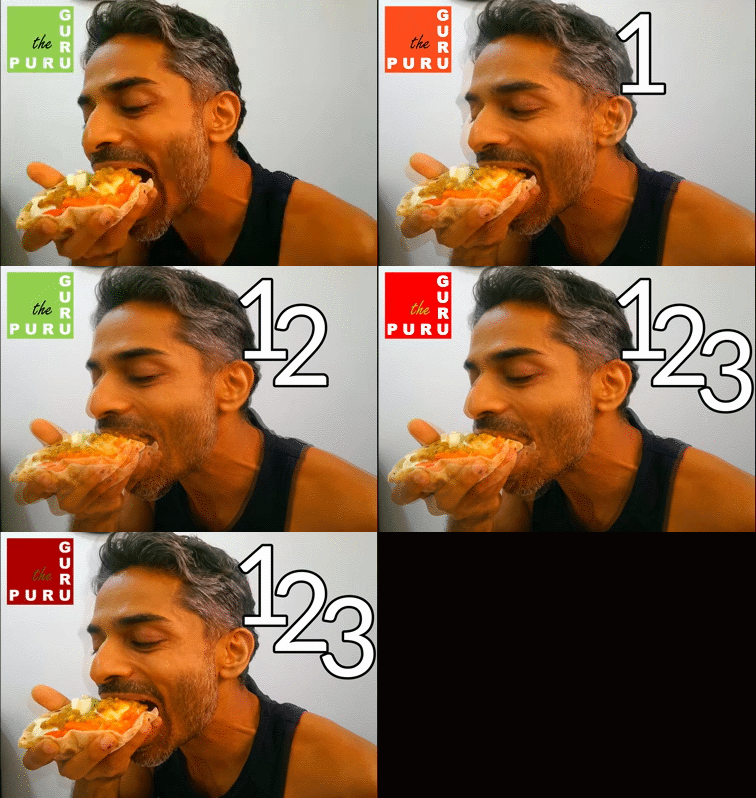
You are unlikely to challenge me to an eating contest, despite my thin frame, if you have seen me feast. The love of food is universal but some of us who take that love to the next level like to label ourselves “foodies”. In modern times, while the tiny minority who are not particularly fond of eating are partially fortunate, the rest of us need to be mindful of how we indulge. An obsession can be healthy or unhealthy. Today, I present 3 game-changers for the foodie in you. If you are able to implement these, your passion for food and drink will work in your favour.
If you find it useful, please share this with your family and friends. All the other 190+ articles are here.
If you would like detailed guidance to discreetly upgrade your life – health and wealth – visit the mentoring page or the coaching conversation page.
(NEW!) For some testimonials from around the world, go here.
Contents
Game-Changers
1 : Master-Slave Clarity
2 : Environment Control
1234Physical Environment
12341234When you can change it
12341234When you cannot change it
1234Information Environment
1234Social Environment
12341234Occasion, not excess
12341234Advanced decisions
12341234Prioritize relationships
3 : Alt Spaces
1234Fasting
1234Foundation
The Interconnected Powers of 3
Journaling
Take-Home Message
Parting Message
Indo-China Background [top]
Broadly speaking, if I were to place my friends into civilizational buckets, the two largest would be Indian and Chinese. Both groups are filled with passionate food lovers. While their local traditional cuisines may have served them reasonably well a century ago, modern abundance has changed the landscape. Today’s foodies enjoy unprecedented access to global cuisines, industrially processed foods, modern preservation techniques, and year-round availability. Yet they also have access to nutritional knowledge that previous generations could scarcely have imagined.
India, China, and countries with large Indian and Chinese diasporas now face epidemics of lifestyle-related disease. Extreme calorie deprivation has become less common, but a different form of malnutrition has taken centre stage: too many calories, too many ultra-processed foods, and too little nutritional quality. The result is immense human suffering and enormous profits for Big Food, animal agriculture, Big Pharma, and the wider sickcare industry.
Post-colonial political independence has not necessarily translated into freedom from powerful interests. Corporate influence now shapes much of the food environment through advertising, product design, lobbying, and the normalization of unhealthy consumption. Governments, regardless of which parties hold office, often seem more responsive to commercial interests than to long-term public health.
Complaining about the system, however, rarely changes your next meal. The intelligent foodie need not eat less joyfully nor abandon the pleasures of food and drink. Instead, you can reclaim control by mastering your relationship with food, designing your environment, and cultivating habits that allow pleasure and health to reinforce rather than undermine one another.
Game-Changers [top]
Here are 3 game-changers that I have been using for many years – they do not require special intelligence, specific equipment or non-trivial financial wealth.
Master-Slave Clarity [top]
The stories we tell ourselves shape us. We like to think we have free will and do not like others controlling us. In that vein, it is important to have clarity in your relationship with food. You are neither your body nor your mind – they are both tools you came to this life with and that you will leave behind when you go.
Almost nobody enjoys pain which they have no control over. The wise amongst us seek out hormetic shocks voluntarily because we know that therein lies opportunities for personal growth in many forms. When it comes to food, it is critical to understand that your food and drink should be the slave that serves you, the master. If you do not have mastery over the Unholy Trinity, and have become a slave to your sensory organs, then, really, you cannot claim that you are much of an independent free-thinking adult.
Recite the mantra, “This is my body in the making,” when preparing a plate of food that you are planning to enjoy and, in parallel, be mindful that your brain is a part of your body that will suffer if your body gets input that is harmful to it. This question I spoke about here can save your life. You are not merely a bundle of cravings. Your body and mind are instruments you inhabit; food is one of the most powerful inputs that shapes how well they function.
Environment Control [top]
Willpower is unreliable when you are hungry, tired, or surrounded by temptation. As a foodie, you will do far better by shaping your environment so that good choices become easier and poor choices become harder.
Physical Environment [top]
Food companies spend billions influencing what you see, smell, and crave. You can use the same principle for your own benefit.
When you can change it [top]
At home, convenience usually wins. If fruit, nuts, roasted chana, and cut vegetables are visible and easy to reach, you are more likely to eat them. If sweets, biscuits, sugary drinks, and fried snacks are hidden away, or better still not kept at home, you will consume less of them. Use smaller plates for calorie-dense foods, portion treats before eating, and make water your default drink. This is not deprivation. It is design. Design such that you do not feel deprivation until you can elevate yourself such that you can find joy in deprivation.
When you cannot change it [top]
When you cannot change the environment, avoid unnecessary exposure. Do not browse the snack aisle when you are hungry. Do not arrive at a party ravenous if you are someone who parties often. Do not place yourself beside temptation and expect willpower to rescue you. Before entering a food-rich setting, ask yourself: Am I hungry, tired, bored, or merely exposed? If the answer is exposure, change the exposure.
Information Environment [top]
Your food environment extends far beyond the supermarket. Advertisements, influencers, delivery apps, and recipe videos all shape your appetite. Be selective about the voices you allow into your feed. Follow people who teach cooking, nutrition, and healthy habits, and be sceptical of marketing claims such as “natural”, “low-fat”, or “protein-rich”. Instead, ask a simpler question: What is actually in this food, and what role will it play in my day?
Social Environment [top]
Food enriches relationships, but socializing does not have to become automatic overeating.
Occasion, not excess [top]
When you meet friends for a meal, focus on the people rather than the volume of food. Order what you genuinely want, share a dessert when it makes sense, eat slowly, and stop when you are satisfied. The goal is simple: say yes to the company, not necessarily to every indulgence.
Advanced decisions [top]
Many situations repeat themselves: celebrations, dinners out, festivals, and weekend gatherings. Rather than negotiating with yourself each time, decide your personal rules in advance. You might choose one dessert that is truly worth enjoying, eat a foundation meal before a late dinner, or limit yourself to one indulgence per outing. Pre-decided policies reduce the need for willpower.
Prioritize relationships [top]
Do not let food rules become more important than friendship. If someone has cooked specially for you, show appreciation. If healthy options are limited, make the best choice available and enjoy the company. Wisdom lies between rigid restriction and complete surrender. Participate generously, choose deliberately, and let the people, not the food, be the main event.
Alt Spaces [top]
The third game-changer concerns the alternative spaces in a fixed capacity. Your day has only so many hours; your stomach has only so much room; your appetite has only so much patience. As an intelligent foodie you do not need to try to eliminate pleasure or eat joylessly. Instead, deliberately decide what fills the space before lesser options rush in to claim it.
Ask two questions:
- What happens when I am not feasting?
- What happens when I first fill much of the available space with the good?
Two practices answer these questions particularly well: fasting and foundation. Let us think about how you can make use of these powerful f-words.
Fasting [top]
Fasting reclaims time. By limiting eating to a defined window, you create a boundary between eating hours and non-eating hours. This often reduces mindless grazing, simplifies food decisions, and interrupts the modern habit of eating continuously throughout the day.
For a foodie, fasting can also enhance enjoyment. A meal that follows a period of anticipation is often more satisfying than food consumed mechanically out of habit. You are not merely eating less frequently; you are creating room to appreciate food more fully.
Icing on the cake? The health benefits of a daily fast accrue to you automatically and painlessly once you make it part of your daily lifestyle.
When you put it all together, you have prepared, pun intended, a large ROTI strategy!
Foundation [top]
Foundation reclaims stomach capacity. Before you encounter the richer, more indulgent parts of a meal, give your body a substantial serving of nuts, seeds, vegetables, legumes, fruit, whole grains, nuts, or seeds. A bowl of dal and vegetables before biryani, a salad before pizza, or fruit before dessert all follow the same principle: start with the good.
This is not a rule against indulgence. It is a sequencing strategy. By building a foundation of fibre, micronutrients, and plant foods first, you leave less room for excess while increasing the overall quality of your diet.
Fill the space wisely
Fasting and foundation work together. Fasting manages the time available for eating; foundation manages the capacity available within a meal. One says, not now; the other says, good things first.
Used together, they turn a simple reality into an advantage: your day has limited hours and your stomach has limited space. By filling those spaces wisely, you make it easier for the foodie in you and the body you are building to thrive together.
The Interconnected Powers of 3 [top]
Journaling [top]
If you enjoy your foodie self-label, you will enjoy writing short daily notes for yourself about your engagement with food. If you aspire to become an intelligent foodie, you may find that this “writing is thinking” aspect of food appreciation deepens both your relationship with food and your understanding of yourself, ultimately contributing to a longer Healthspan. This practice is especially useful if you have evidence, or even just a suspicion, that your passion for food is no longer serving your best interests.
Take-Home Message [top]
A love of food isn’t the problem—an unhealthy obsession is, especially amid modern abundance and constant temptation. Reclaim control with three game-changers: master-slave clarity (you are the master, food the slave—your body and mind are instruments, so don’t let your senses run the show); environment control (willpower is unreliable, so keep wholesome foods visible, hide junk, be selective about ads and influencers, and focus on people over volume at social meals); and alt spaces (fill limited hours and stomach room with the good first—use fasting to reclaim time and foundation to reclaim capacity by starting meals with nuts, seeds, vegetables, legumes, or whole grains). Add journaling to deepen self-understanding. You needn’t abandon pleasure—master your relationship with food, design your environment, and let pleasure and health reinforce each other.
Parting Message [top]
Winning the game as a foodie is as simple as 1, 2, 3.
It is your smallest of habits that define who you are today and who you will be tomorrow. If everything you do is consistent with your core beliefs and desires, then a long and healthy life of joy is pretty much guaranteed to be yours. If you would like detailed guidance, you know how to reach me. If you found this useful, please do share it with others.
Puru

Dr Purnendu Nath spends his waking hours focusing on helping individuals and organizations reach their goals, to make the world a better place. He speaks, writes and advises on topics such as finance, investment management, discipline, education, self-improvement, exercise, nutrition, health and fitness, leadership and parenting.

